
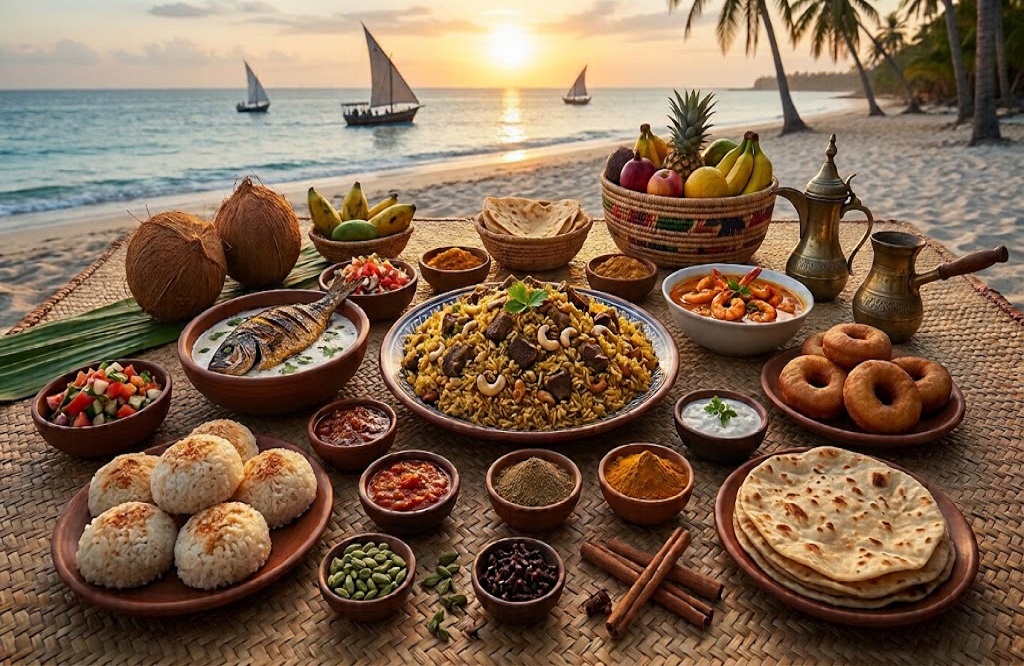
Discover the flavours, ingredients and dishes that make Kenya’s coast a destination for food lovers.
If you visit Mombasa, one of the best ways to experience the coast is through its food.
The aroma of spices drifting from a kitchen, freshly grilled fish by the ocean, a plate of fragrant rice, or hot mahamri served with tea can tell you something about the region’s history and everyday life.
Swahili food is more than a collection of recipes. It is a cuisine shaped by centuries of life along the East African coast, where local communities interacted with traders and travellers from across the Indian Ocean. African, Arab, Persian, Indian and other influences became part of a distinctive coastal food tradition, built around local ingredients, family cooking and shared meals.
For visitors, it offers a delicious introduction to Mombasa and the wider Kenyan coast.
What Is Swahili Cuisine?
Swahili cuisine is the food tradition associated with Swahili-speaking coastal communities in East Africa. In Kenya, it is especially connected with places such as Mombasa, Lamu, Malindi and other coastal towns.
The cuisine reflects the region’s position along historic Indian Ocean trading routes. Spices, cooking techniques and ingredients travelled between communities, while local cooks adapted them to the foods available along the coast.
The result is not simply a mixture of foreign dishes. Over generations, these influences became part of a local culinary identity.
Rice, coconut, seafood, beans, wheat breads and aromatic spices feature prominently. Meals may be rich and fragrant, but not every dish is hot with chilli. Some rely on gentle spice, coconut milk and the natural flavour of fish or vegetables, while chilli is added separately for those who want more heat.
Swahili food is also closely tied to hospitality and community. Large meals are prepared for weddings, religious celebrations, family gatherings and visitors. Food is often something people make and enjoy together, rather than simply a meal eaten in a hurry.
The Ingredients That Define Coastal Food
A few ingredients appear repeatedly in Swahili cooking and help give coastal dishes their distinctive character.
Coconut is one of the most important. Coconut milk enriches fish curries, vegetable dishes and rice, creating a creamy texture without needing dairy.
Rice is central to many meals, especially pilau, biryani and coconut rice. It can be cooked with spices, meat stock or coconut milk, depending on the dish.
Spices such as cardamom, cloves, cinnamon, cumin, black pepper and turmeric bring warmth and fragrance. The exact combination varies from cook to cook.
Tamarind and lime add acidity, balancing rich coconut sauces and grilled seafood.
Seafood is naturally prominent along the coast. Fish, prawns, crab and octopus appear in different preparations, from grilling over charcoal to slow cooking in coconut-based sauces.
Onions, tomatoes, garlic, ginger, fresh herbs, beans and leafy vegetables round out the everyday coastal pantry. The ingredients may be familiar, but the way they are combined gives the food its character.
Dishes You Should Try
If you are new to Swahili food, these are some of the dishes worth looking for during your stay.
Pilau
Pilau is one of the best-known coastal rice dishes. Rice is cooked with a mixture of spices and often meat, producing a fragrant, savoury meal.
The spices may include cumin, cardamom, cloves, cinnamon and black pepper. The rice takes on a deep colour and flavour as it cooks with the seasoning and stock.
Pilau is popular for family meals and celebrations, but it is also widely available in local restaurants. It is a good first choice for visitors who want to try coastal flavours without ordering something unfamiliar.
Biryani
Biryani is another signature dish, often prepared with chicken, beef or goat. Coastal versions commonly feature richly spiced meat served with fragrant rice, sometimes layered or prepared separately before serving.
While pilau and biryani are both rice dishes, they are not the same. Biryani often has a more elaborate preparation, with the meat and rice cooked or assembled in distinct stages.
It is frequently associated with celebrations, special meals and gatherings. If you enjoy rice dishes, trying both pilau and biryani is a good way to appreciate the variety within coastal cooking.
Samaki wa Kupaka
For seafood lovers, samaki wa kupaka is a must-try.
The name refers to fish coated or finished with a rich sauce, commonly made with coconut milk, spices and citrus. The fish may be grilled first, then covered with the sauce and cooked until the flavours come together.
The combination of smoky fish, creamy coconut and a little acidity captures much of what makes coastal cuisine distinctive.
It is often served with rice, chapati or other accompaniments. Ask about the fish available that day, as the type and preparation can vary.
Wali wa Nazi
Wali wa nazi is rice cooked with coconut milk. It is simple, comforting and versatile.
The coconut gives the rice a gentle richness that pairs well with fish, beans, vegetables or curry. It is an excellent option if you want to experience coconut-based coastal cooking without a heavily spiced main dish.
Mahamri and Mbaazi
Coastal breakfast is worth waking up for.
Mahamri are lightly sweet, cardamom-scented pieces of fried dough. They are often enjoyed with chai and can be eaten on their own or alongside mbaazi—pigeon peas cooked in coconut milk.
The combination of soft, fragrant bread and creamy beans makes a satisfying breakfast. It is one of the dishes that visitors may remember long after their trip.
Viazi Karai
Viazi karai is a popular coastal snack made from potatoes coated in spiced batter and fried until crisp.
The potatoes are often served with a tangy tamarind-based sauce, sometimes with chilli. They are especially appealing when freshly cooked, with a crisp outside and soft centre.
You may find them at street-food stalls and small local eateries. They are an easy snack to try while exploring Mombasa.
Urojo
Urojo, sometimes called Zanzibar mix, is a tangy, hearty street-food dish found in parts of the Swahili coast. It typically combines a spiced broth with ingredients such as potatoes, cassava, mango and other toppings.
Recipes vary, and the balance of sour, spicy and savoury flavours can be quite distinctive. It is a good choice for adventurous eaters who want to try something beyond the familiar rice and curry dishes.
Mishkaki and Grilled Seafood
Mishkaki are skewers of marinated meat grilled over coals. They are popular as an evening snack or casual meal.
Along the coast, grilled fish and other seafood are also worth seeking out. Simple preparations—fresh fish, lime, seasoning and charcoal—can be just as memorable as elaborate dishes.
When ordering whole fish or seafood sold by weight, check the price and portion size before it is prepared.
Is Swahili Food Very Spicy?
Not necessarily.
Swahili food is often aromatic rather than intensely hot. Spices such as cardamom, cloves, cumin and cinnamon add depth, while chilli may be served separately or added according to preference.
Some dishes can certainly be spicy, and recipes differ between households and restaurants. If you prefer mild food, ask for less chilli when ordering. If you enjoy heat, you can often add it at the table.
The important thing to remember is that “spiced” does not always mean “hot.”
Where Should You Try It?
In Mombasa, you can find Swahili dishes in local restaurants, small eateries, markets and family-run food businesses. Old Town is known for its coastal food culture, while neighbourhood restaurants across the city serve everyday meals such as pilau, biryani, fish and coconut curries.
You do not need to choose the most expensive restaurant to enjoy the cuisine. A busy local place serving freshly prepared food can offer a memorable meal.
A few practical tips:
- Look for food that is freshly cooked and served hot.
- Ask what is available that day, especially for fish and seafood.
- If you are unsure about a dish, ask the staff to describe it.
- Try local breakfast as well as lunch or dinner.
- Tell the cook if you have allergies or need to avoid particular ingredients.
- If you are sensitive to chilli, ask before ordering.
Food is also a good reason to slow down. Enjoy a cup of chai, try a snack you have never heard of, or share a few dishes with friends.
More Than a Meal
Swahili cuisine tells a story of the coast: its trade routes, communities, ingredients and traditions. It brings together local produce and influences from across the Indian Ocean, but its identity belongs to the people who have cooked, adapted and shared these dishes over generations.
For visitors to Mombasa, trying the food is one of the simplest ways to connect with the place beyond its beaches and historic landmarks.
Start with pilau or biryani. Try fish cooked with coconut. Have mahamri and mbaazi for breakfast. Pick up viazi karai as a snack. And leave room for something you have never tasted before.
You may arrive for the ocean, the warm climate or the adventure of exploring Kenya’s coast.
But the flavours of Swahili food might become one of the memories you take home.
Leave a Reply