
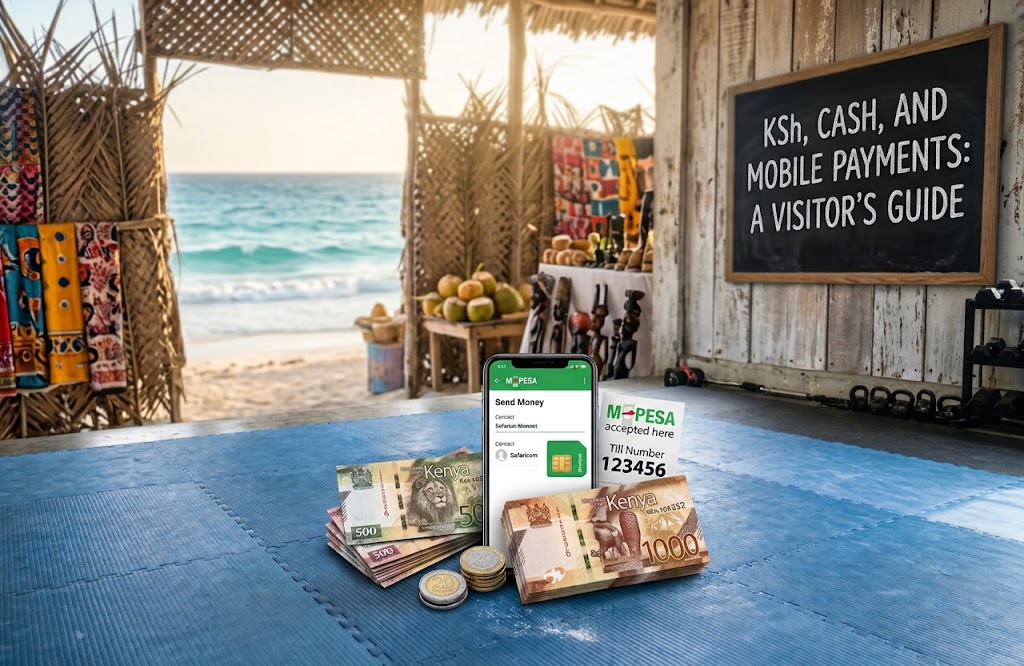
Travelling to a new country often means getting used to a different currency and different ways of paying. In Kenya, you’ll find a mix of cash, bank cards and mobile money. Understanding how these work before you arrive will make everyday purchases easier, whether you’re buying lunch, visiting a market or heading out to explore Mombasa.
The good news is that you don’t need to carry large amounts of cash or figure everything out on your first day. With a little preparation, paying for things in Kenya is straightforward.
The Kenyan Shilling
Kenya’s official currency is the Kenyan shilling, written as KES or KSh.
You’ll see prices displayed in shillings in shops, restaurants, supermarkets and local businesses. The exchange rate changes, so it’s best to check the current rate shortly before travelling rather than relying on an old conversion.
A few practical tips:
- Keep some smaller notes for everyday purchases.
- Don’t expect every small shop or market stall to have change for a large note.
- Check the amount you receive when exchanging money.
- Keep your cash in a secure place and avoid displaying large amounts in public.
For a visitor, the most useful approach is to carry a modest amount of cash for small purchases while using a card or mobile payment where available.
Should You Bring Cash?
Yes—having some Kenyan shillings is useful, even if you usually pay by card at home.
Cash is especially handy for small purchases, local markets, tips and places that don’t have card terminals. Some local transport options and smaller vendors may also prefer cash or mobile money.
You don’t need to exchange all your travel money before arriving. You can exchange currency or withdraw shillings from an ATM in major towns such as Mombasa.
When withdrawing cash, choose an ATM located inside a bank or shopping centre where possible. Check the fees displayed on the machine, and remember that your own bank may also charge for international withdrawals.
It’s generally better to withdraw during the day and avoid handling large amounts of cash in busy public areas.
Paying by Bank Card
Visa and Mastercard are accepted at many hotels, supermarkets, shopping malls, larger restaurants and established businesses.
A bank card can be convenient for:
- Shopping at supermarkets and malls.
- Paying at larger restaurants.
- Hotel and accommodation expenses.
- Booking tours or other services through established providers.
However, card acceptance is not universal. Smaller shops, market stalls and local transport providers may not have card machines. Some terminals may also be temporarily unavailable.
Before travelling, check with your bank that your card is enabled for international use. It’s also worth knowing how to freeze your card through your banking app in case it gets lost.
When paying by card, keep the card in sight and check the amount before confirming the transaction. If a terminal offers to charge you in your home currency or Kenyan shillings, compare the options carefully; paying in the local currency is often preferable, though your bank’s fees and exchange rate will determine the final cost.
M-Pesa: Kenya’s Mobile Money System
One of the most distinctive parts of everyday life in Kenya is M-Pesa, a mobile money service operated by Safaricom.
M-Pesa allows people to send and receive money, pay businesses and make many everyday transactions using their mobile phones. You’ll often see businesses displaying a Till Number or Paybill Number for customers who want to pay through M-Pesa.
For residents, it’s an essential part of daily life. For visitors, it can be useful—but it isn’t necessary for every trip.
If you have a local Safaricom SIM and are eligible to register, you may be able to set up an M-Pesa account using your passport and required registration details. Availability and requirements should be confirmed with Safaricom when you arrive.
Visitors should not assume that every foreign SIM or phone number can use M-Pesa in the same way as a local account.
Kenya has also introduced visitor-focused digital payment options, including TouristTap, designed to help travellers pay merchants through their existing card and compatible mobile devices. Availability and merchant acceptance may vary, so it’s best to treat this as an additional option rather than your only payment method. [1][2]
Do You Need M-Pesa for Your Visit?
For a short stay in Mombasa, you can usually manage with a combination of:
- A bank card for larger purchases.
- Kenyan shillings for small transactions.
- Your phone for online bookings, communication and ride-hailing.
M-Pesa can make some local transactions easier, but you don’t need to set it up just to enjoy your trip.
If you decide to use it, follow the official registration process and keep your PIN private. Never share your PIN with someone claiming to be an agent, customer-care representative or someone helping you complete a payment.
Always check the recipient’s number or business details before confirming a transaction. Mobile money transfers can be difficult to reverse if you send money to the wrong person.
What About US Dollars or Euros?
You may see some tourism-related services quoted in US dollars, especially for safaris, tours or international travel packages. However, everyday purchases in Mombasa are generally priced in Kenyan shillings.
You should not expect to pay for ordinary shopping, food or local transport in euros or dollars.
If you bring foreign currency to exchange, use a reputable bank or licensed bureau. Avoid exchanging money informally with strangers.
Exchange rates and fees vary, so compare the rate offered and ask how much you will receive before handing over your money.
A Few Everyday Payment Tips
A little local knowledge can make paying for things less stressful:
Keep small notes. They’re useful for minor purchases and make it easier to pay the exact amount.
Ask before paying. If you’re unsure whether a business accepts cards or mobile money, simply ask.
Check the total. Confirm the amount before paying, especially when using a card or mobile payment.
Keep receipts for larger purchases. They can be helpful if you need to check a transaction later.
Be careful with payment messages. Don’t rely only on a screenshot or text message shown by someone else as proof of payment. Check your own account or confirmation.
Avoid sharing sensitive information. No legitimate payment should require you to reveal your PIN or banking password.
What Should You Bring for Your Stay in Mombasa?
For your trip, we recommend bringing at least one bank card that works internationally and having access to a little spending money in Kenyan shillings.
You can withdraw or exchange money after arriving in Mombasa, and there are banks, ATMs and shopping centres in the city. Just make sure you have a payment option available for your first transport or small purchases.
During the Warrior Retreat, accommodation and the transport arrangements included in the package are organised for you. You’ll mainly need personal spending money for things such as snacks, shopping, optional activities, meals or other expenses not included in the retreat.
Keep It Simple
You don’t need to master every payment system before visiting Kenya.
Bring a working bank card, keep some Kenyan shillings available and use mobile money if it’s convenient for you. For most visitors, that combination is enough to handle everyday expenses in Mombasa.
Once you arrive, you’ll quickly get used to seeing prices in shillings, M-Pesa payment signs and the different ways local businesses accept payment.
A little preparation goes a long way—and then you can focus on enjoying your time on the Kenyan coast.
Sources and useful links
- Kenya Tourism – Visitor Information and Travel Tips
- Kenya Ministry of Tourism – TouristTap
- Safaricom – M-Pesa
- Central Bank of Kenya – Payment Service Providers
Note: Payment services, fees, exchange rates and registration requirements can change. Check the latest details with your bank or payment provider before travelling.
Leave a Reply